


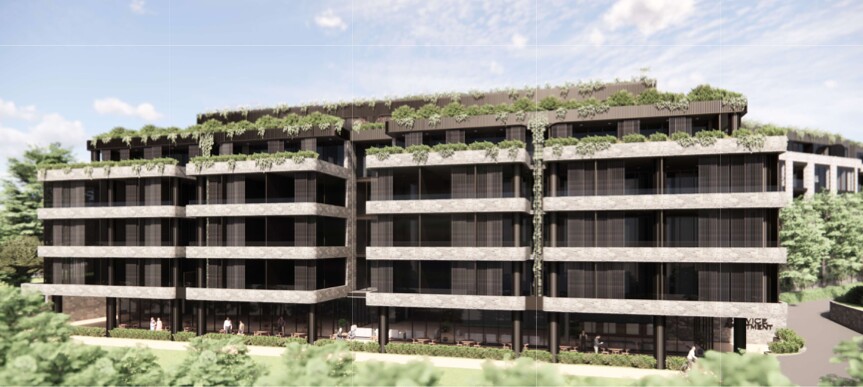
 Image of development from the EIS
142–150 Narrow Neck Road, Katoomba
The Blue Mountains is one of the most bushfire-prone landscapes in Australia. Our eucalypt forests, steep valleys and dry ridgelines mean that fire is a natural part of the environment - but with climate change driving hotter, more extreme conditions, the risks are increasing.
A high-density, multi-storey housing development in this setting is dangerous for both the environment and the community. Concentrating people and buildings in fire-prone areas puts heavy pressure on the land. Clearing bushland and replacing it with buildings and hard surfaces fragments habitat, reduces biodiversity and strips away natural functions that help landscapes recover after fire. Healthy ecosystems store water, stabilise soils and provide critical refuge for wildlife. When these functions are lost, the land is left more exposed to fire damage and is slower to regenerate once fire has passed.
For residents, the challenges are equally stark. In places with only single-road access, such as Narrow Neck, bushfire evacuation is already difficult. Adding hundreds more people and vehicles would create dangerous bottlenecks, making it harder for emergency services to respond and harder for people to escape safely.
Local context and access constraints further increase bushfire risk at this site:
- The site itself is not classified as bushfire prone land, but it is surrounded by areas that are.
- Bushland is located approximately 200 metres to the north-west and 300 metres to the south-west, with Cahill’s Lookout around 700 metres away - the location of a significant fire threat in 2014.
- Roads in the area can be narrow and winding.
- The main evacuation route to the Great Western Highway is via Narrow Neck Road - a route that passes entirely through bushfire-prone land.
- In a fire event, multiple emergency services - including RFS, Fire and Rescue, SES, Ambulance and Police - would need to access the area, placing additional pressure on already constrained local roads and highway
Protecting the Blue Mountains means recognising its limits. Housing must be planned in ways that respect this unique environment and keep both ecosystems and communities safe from escalating bushfire risks.
You'll receive regular information and updates on the Society campaign to oppose this development, and its many other activities.

We acknowledge the traditional custodians of this land
the Darug and Gundungurra people
and pay respect to their Elders past and present.