


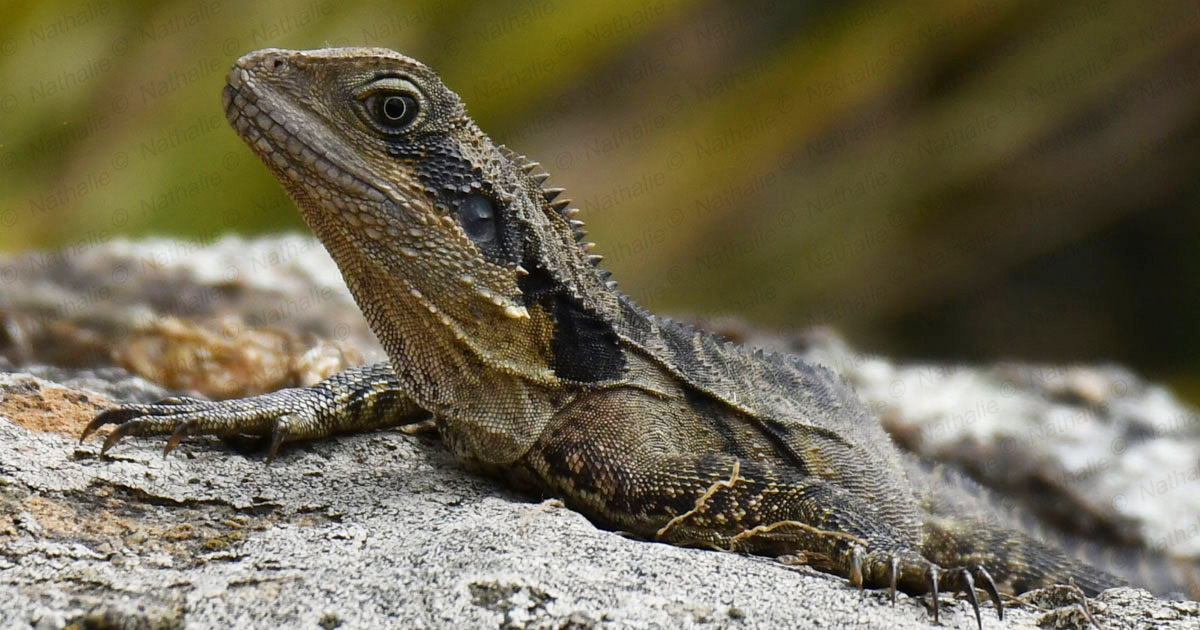
 Eastern Water Dragon (Nathalie Verellen)

Then add your name to our database
Sat. 4 May at 2.30pm
Lithgow Transformation Hub
 Gould’s Wattled Bat (Bruce Thomson)
Blue Mountains Cultural Centre
Katoomba
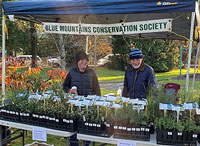
Our nursery stall at the Blackheath Growers Market
(Last nursery stall
before Spring)
Autumn 2024 edition
e-Waste Recycling
Submissions are due by 30 April 2024
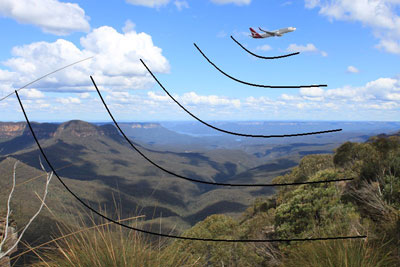
Now is the chance to have your say!
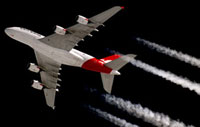
On 6 February 2024 the Senate agreed to establish an inquiry into aircraft noise.
It is crucial that Blue Mountains residents take this opportunity to make a submission about the impact flight paths out of Western Sydney International airport will have - on our lives and on our precious World Heritage Area.
The Inquiry won’t know that Western Sydney and Blue Mountains residents are deeply concerned about the potential effects of aircraft unless we tell them.
What is the Inquiry investigating?
The impact and mitigation of aircraft noise on residents and business in capital cities and regional towns, with particular reference to:
- the effect of aircraft noise on amenity, physical and mental wellbeing and everyday life of residents;
- the effect of aircraft noise on small business;
- any proposals for the mitigation and limitation of aircraft noise, including flight curfews, changes to flight paths and alternatives to air travel;
- any barriers to the mitigation and limitation of aircraft noise; and
- any other related matters.
Where is the information about Western Sydney International flight paths?
Here is a list of resources to help you:
- Greens win senate inquiry aircraft noise
- Australian Senate - Aircraft Noise
- Australian Senate - How to make a submission
- Australian Senate - Public Hearings
- Australian Senate - Online Submission
What you need to do:
We need as many people as possible to communicate their concerns about the flight paths and aircraft noise issues, so the Inquiry understands the breadth and depth of the issues that need to be addressed. A large volume of submissions will ensure a good understanding of how detrimental these problems are for Blue Mountains residents and the environment.
It is important that you write your submission in your own words and address the points that concern you. The best submissions:
- clearly address some or all of the terms of reference—you do not need to address each one
- are relevant and highlight your own perspective
- are concise, generally no longer than four to five pages
- begin with a short introduction about yourself or the organisation you represent
- emphasise the key points so that they are clear
- outline not only what the issues are but how problems can be addressed, as the committee looks to submissions for ideas to make recommendations
- only include documents that directly relate to your key points
- only include information you would be happy to see published on the internet.
Your response can be submitted online here
If you are unable to write a submission, you can use your phone or computer to make a voice-to-text submission (details on how to do this on this webpage
If you need some help writing your submission, feel free to contact Annette Cam on president@bluemountains.org.au
Submissions are due by 30 April 2024
Indian Myna Eradication Project - Information Event
Lithgow Transformation Hub, Maldhan Ngurr Ngurra,
154 Mort Street, Lithgow
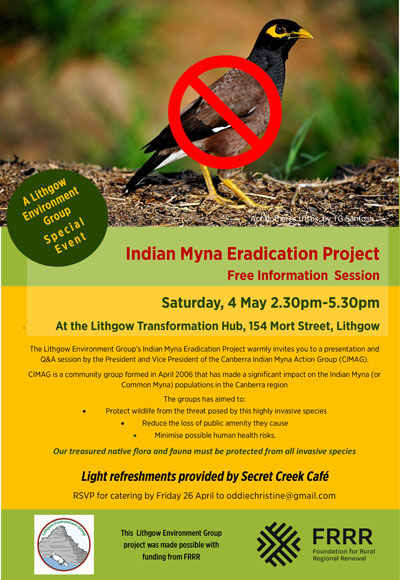
Andrew Cox, CEO of the Invasive Species Council, will speak about various invasive species' threats now facing Australia.
CIMAG is a community group formed in April 2006 to reduce the impact of this exotic invader.
CIMAG has the aim of protecting our native birds and other wildlife from the threat posed by the Indian Myna (or Common Myna), to reduce the loss of public amenity that they cause and to minimise possible human health risks.
The group has made a significant impact on the population of mynas in the Canberra region.
Light refreshments provided by Secret Creek Café
RSVP: Friday, 26 April to: oddiechristine@gmail.com
Blue Mountains Cultural Centre at Katoomba
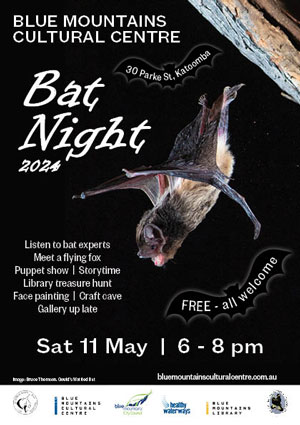
Meet a Flying Fox up close, learn about microbats, listen to ancient local Indigenous stories, find the treasure in the library and get arty in the craft cave.
With face painting, snacks from the Gallery Café and our gallery open free of charge, there will be something for everyone. Uncover the secrets of these misunderstood creatures and discover why they’re such a vital part of our world!
Brought to you with help from our friends from the Australasian Bat Society, Blue Mountains City Council Healthy Waterways Team, Blue Mountains Conservation Society and Katoomba Library.
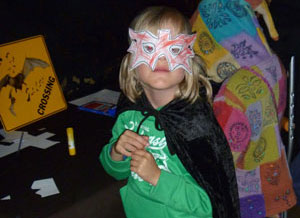
Don’t forget to dress as a bat and embrace the magic of these winged wonders!
Schedule of Talks ‑ Workshop Room
6:15 pm: Marg Turton “Microbats”
6:45 pm: Tim Pearson “Flying Foxes”
7:15 pm: Stuart Hill, Emeritus Professor UWS “Research in a tropical cave in Trinidad”
This is a free event
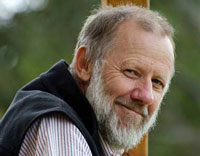
with Andy Macqueen
Conservation Hut, Wentworth Falls
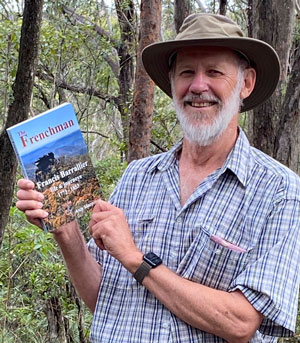
Meet the Society President. If you have any questions, please bring them to the meeting.
7.25 Meet Dylan McCarthy.
7.40 Tea/coffee break. Make new friends.
8.00 Meet Andy Macqueen.
Here's some more information about Andy and his books.
The April 2024 edition of Hut News is now available for downloading.
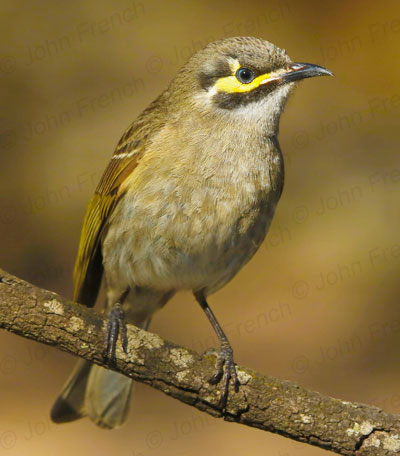 Yellow-faced Honeyeater (John French)
- Tom Whitton
- Native Plant Nursery - Sunday 14 April
- Petition to raise greenhouse gas emission reduction targets (Shirley Lewis)
- From the President (Annette Cam)
- Hazelbrook Creek Crayfish Kill …Origin Solved … Fine Issued
- Banksias on Narrow Neck Plateau and Newnes Plateau (Alan Page)
- A Day in Medlow with the Plant Study Group (Meredith Brownhill)
- Birds of the Blue Mountains: Leaden Flycatcher (Annette Cam)
- This is My Land – or is it ? (Thomas Ebersoll)
- New sighting of endangered microbat (Ákos Lumnitzer)
- Housing Reform Rally at Parliament House (Elizabeth Howard)
- Intergenerational Transformations Series (Don Morison)
- Flowering eucalypts (Jo Carroll)
- Nature observations in 1802 (Andy Macqueen)
- How Many Insect Species Exist in Australia?
- Resilient Thornbill (Jo Carroll)
- Counting the seasons (Christine Davies)
- Leeches
- Thought-provoking New Zealand (Christine Davies)
- Adelina’s Mailbag
- and much more ...
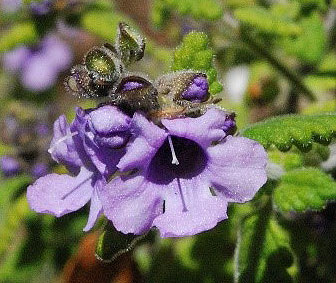 Cut-leaf Mint-bush (Prostanthera incisa) (Gisela Schumacher)
We will have a good selection of tube stock: Prostanthera (mint bush) for a splash of purple or mauve, Crowea and Bauera pretty in pink, Acacia for a bright gold, and many more.
Visit our Native Plant Nursery webpage for our range of plants.
For enquiries or to place an order - Please contact : Nursery Manager, Paul Irwin: plantnurserybmcs@outlook.com
Read our submission
 Welcome to the Blue Mountains
Under the government’s proposal, increased building heights and density will be permitted in certain areas. In the Blue Mountains this will mean:
- Up to 6-storey residential flat buildings and shop-top housing in town centres and medium density residential areas within 800m of a railway station or town centre
- 2-3 storey residential buildings of various types in low density residential areas within 800m of a railway station or town centre
- 2-3 storey dual occupancies (attached or detached) on smaller blocks in all low density residential areas.
These new heights and densities (called ‘non-refusal standards’) will override Council’s current development controls, including environmental and heritage protections.
You won’t know that one is being built next door until the bulldozer or concrete truck arrives.
Is this what we want for the Blue Mountains?
Here's more information including the points you may wish to make in your submission.
Here's the Society's submission
Western Sydney International Airport
Here's the Society's submission on the draft Environmental Impact Statement for Western Sydney International (Nancy-Bird Walton) Airport Airspace and Flight Design.
Residents Against Western Sydney Airport Update No 39 - March 2024 - what's the latest!
Background and Concerns
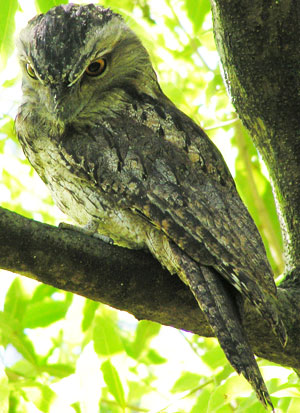 a disturbed Tawny Frogmouth (Alan Page)
The flight paths cross most of the 1.03 million hectares of the Greater Blue Mountains World Heritage Area. In areas furthest from the airport, the height of flights will be up to 20,000ft above the runway. Remember – the elevation of the Blue Mountains increases as you move west. So if you live at Katoomba (elevation 1023m = 3356 ft) and the flight goes overhead at 17,500ft above the runway, then it is at a height of 14,144 ft above you.
These flight paths will change the way we live and enjoy our lives and they are permanent. We do not believe that our concerns have been listened to in the past.
We are concerned about:
- The excess level of noise from overflights across the entire Blue Mountains, including the wilderness areas, the World Heritage Area and the villages. The impact on our values, health and way of life in the Blue Mountains is unacceptable.
- The impact of the noise on the internationally renowned wilderness values of the Blue Mountains, which are protected by the Wilderness Act 1987. This will destroy people’s enjoyment of the wilderness and negatively affect tourism.
- The negative impact of these flight paths on tourists’ enjoyment of the Blue Mountains iconic views. Who want to see and hear a plane fly by when looking at the Three Sisters?
- The negative impact of the high levels of noise on the wildlife of Burragorang State Conservation Area, the Warragamba Protected Area and other natural areas near the airport. These areas will be subjected to noise levels of up to 75dB(A) day and night which will impact the wildlife, particularly birds and frogs which depend on call for communication and breeding.
- High risk of wildlife strike, particularly the threatened Grey-headed Flying-fox. Flying-foxes are the animal most involved in collisions with aircraft at airports in Australia. At 1 kg, they can do substantial damage to aircraft, including grounding flights and putting aircrew and passengers at risk. The flying-fox is killed by the strike.
- Flying-foxes and birds are important pollinators of plants (including eucalyptus) in our national parks and negative effects on populations will negatively affect our biodiversity.
- We are risking our international reputation by not fully protecting this World Heritage Area and our wilderness, both of which have legal protections.
- The data collected by WSI Co in their surveys of birds and flying-foxes and other wildlife is entirely inadequate. The World Heritage Guidelines require that all necessary data is collected so that negative impacts are minimized or removed before an action (ie flight paths) can proceed.
We want:
- Flight paths to be redesigned so they don’t fly over the World Heritage Areas of the Blue Mountains under heights of 31,000ft.
- A curfew and hourly limits to the number of flights as for Kingsford Smith Airport.
- Robust surveys that conform to both government and World Heritage guidelines to adequately assess risk to the GBMWHA, adjacent natural areas. The risks must then be eliminated or minimized, or the action must not proceed.
Autumn 2024 edition
The Autumn 2024 Edition is now available to download.
In this issue you will find -
First Nations:- Planting day at Katoomba Public School
- Birriban News
- Planting the way forward
- Vale Nick De Brett
- Natural Area Operations News
- Post-bushfire monitoring research
- Recently published paper on the flying season population dynamics of the endangered Giant Dragonfly in the Blue Mountains
- Book Review: A Wide & Open Land - Walking the last of Western Sydney's woodlands by Peter Ridgeway
- Private Land Conservation Conference
- Remote Bushcare
- Swampcare
- Events and more
Previous editions of the Gecko Newsletter can be found here.
Information about the Blue Mountains City Council Bushcare can be found here.
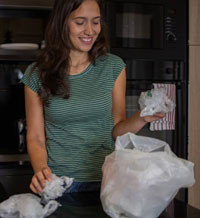
new soft plastics and e-waste recycling trial
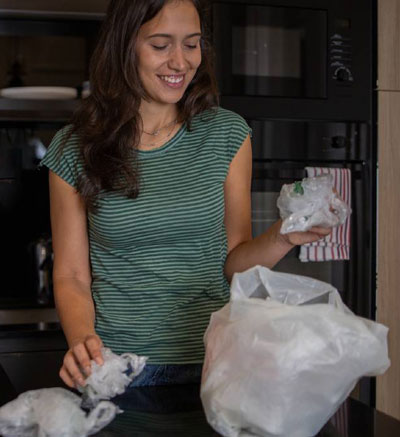
During the trial period, residents can drop off household quantities of soft plastics for recycling for free at Blaxland and Katoomba Resource Recovery and Waste Management Facilities.
Residents can also now drop off all e-waste (anything with a cord) for recycling at the facilities.
Council has teamed up with RecycleSmart who will collect the soft plastics and e-waste items and deliver them to their recycling partners for processing.
These new options will allow residents to divert waste from landfill and help the Blue Mountains transition to a circular economy.
The circular economy reduces waste by sharing, leasing, reusing, repairing, refurbishing and recycling existing materials and products as long as possible. In this way, the life cycle of products is extended and can minimise the amount of waste in landfills.
Blue Mountains Mayor Mark Greenhill said: “As part of Council’s goal to transition the Blue Mountains to a circular economy, we have found a solution to assist residents to recycle their soft plastics and e-waste and help divert them from landfill.
“This means residents can confidently recycle soft plastics including bread bags, bubble wrap, cereal box liners, packets from lollies, chocolates and chips, resealable bags, grocery bags and plastic film.
“They can also recycle e-waste including all small appliances, DVD players, smartwatches, electric toothbrushes and more.”
Visit the Council's Waste & Recycling webpage for a list of acceptable soft plastics and e-waste items that can be recycled at its facilities.

– the Darug and Gundungurra people –
and pay respect to their Elders past, present and emerging.